
- English
- Español
- Português
- русский
- Français
- 日本語
- Deutsch
- tiếng Việt
- Italiano
- Nederlands
- ภาษาไทย
- Polski
- 한국어
- Svenska
- magyar
- Malay
- বাংলা ভাষার
- Dansk
- Suomi
- हिन्दी
- Pilipino
- Türkçe
- Gaeilge
- العربية
- Indonesia
- Norsk
- تمل
- český
- ελληνικά
- український
- Javanese
- فارسی
- தமிழ்
- తెలుగు
- नेपाली
- Burmese
- български
- ລາວ
- Latine
- Қазақша
- Euskal
- Azərbaycan
- Slovenský jazyk
- Македонски
- Lietuvos
- Eesti Keel
- Română
- Slovenski
- मराठी
- Srpski језик
Kina Isostatisk grafit Tillverkare, leverantörer, fabrik
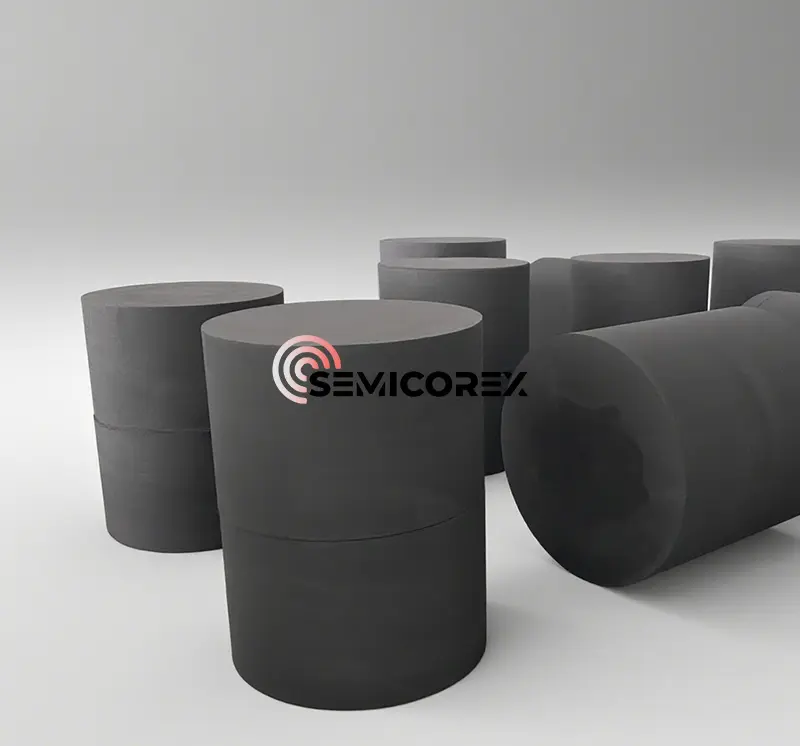
Carbon/graphite material molding essentially involves increasing the density of the powder mixture and ensuring close contact between the aggregate and binder to produce a green body with a desired size, morphology, and minimal machining allowance. The four main molding methods are extrusion, compression molding, vibration molding, and isostatic pressing. Common carbon/graphite materials on the market (for example, charcoal used for household fires) are mostly formed using hot extrusion and compression molding (cold or hot). Isostatic pressing offers superior molding performance.
The principle of isostatic pressing is based on Pascal's law: pressure applied to a medium (liquid or gas) in a sealed container is uniformly distributed in all directions, with the pressure on the surface being proportional to the surface area. Isostatic pressing involves placing a sample, enclosed in a sealed container, within a high-pressure cylinder. Leveraging the incompressible nature of the liquid medium and its ability to uniformly transmit pressure, the sample is uniformly pressed from all directions. When the fluid is injected into the cylinder, the pressure is evenly transmitted in all directions according to the principles of fluid mechanics. The sample in the cylinder is then subjected to uniform pressure in all directions.
Due to the isostatic pressing method, isostatically pressed graphite exhibits excellent isotropy, with properties independent of shape, size, or sampling direction. The material possesses a dense microstructure, high mechanical strength, high surface hardness, and oxidation resistance. Strong performance and high-temperature resistance; the material has excellent thermal shock resistance and is less susceptible to cracking under rapid cooling and heating conditions.
1. Isotropy
Different molding methods result in different properties in different directions. This is primarily reflected in resistivity, thermal conductivity, mechanical properties, and thermal expansion coefficient. The general measurement method is to sample the product perpendicular to and horizontally from the pressure surface, measure the properties separately, and then divide the smallest value by the largest value to obtain the isotropy ratio.
Traditional carbon/graphite products exhibit significant anisotropy, i.e., the properties of the product are different in the directions perpendicular to and horizontal to the pressure surface. The corresponding difference in performance is generally greater than 1:1.1, hence the term anisotropy. In many cases, this difference is fully exploited, and the greater the difference, the better. Examples include graphite electrodes for steelmaking and brushes for motors. Many applications, such as EDM and single-crystal silicon thermal field applications, increasingly require carbon/graphite products to exhibit isotropy (with an orientation ratio within the 1:1.05 range).
2. Large Dimensions
The market is increasingly demanding larger product sizes. For example, single-crystal silicon products have grown from 6- and 8-inch sizes to 12-inch sizes. The size of graphite materials used in thermal fields is also increasing. This is also increasing. Similar trends are seen in other related industries. Graphite for EDM, continuous casting, and nuclear reactors also requires large-scale products. This is difficult to achieve using molding and extrusion methods. The primary problem with large-scale product production is calcination cracking, and the larger the product, the higher the chance of calcination cracking.
3. Fine Structure
As a structural material, it requires high physical and chemical properties. On the one hand, the finer the particle size of the carbon particles that make up the carbon/graphite material, the denser its texture and the higher its mechanical strength.
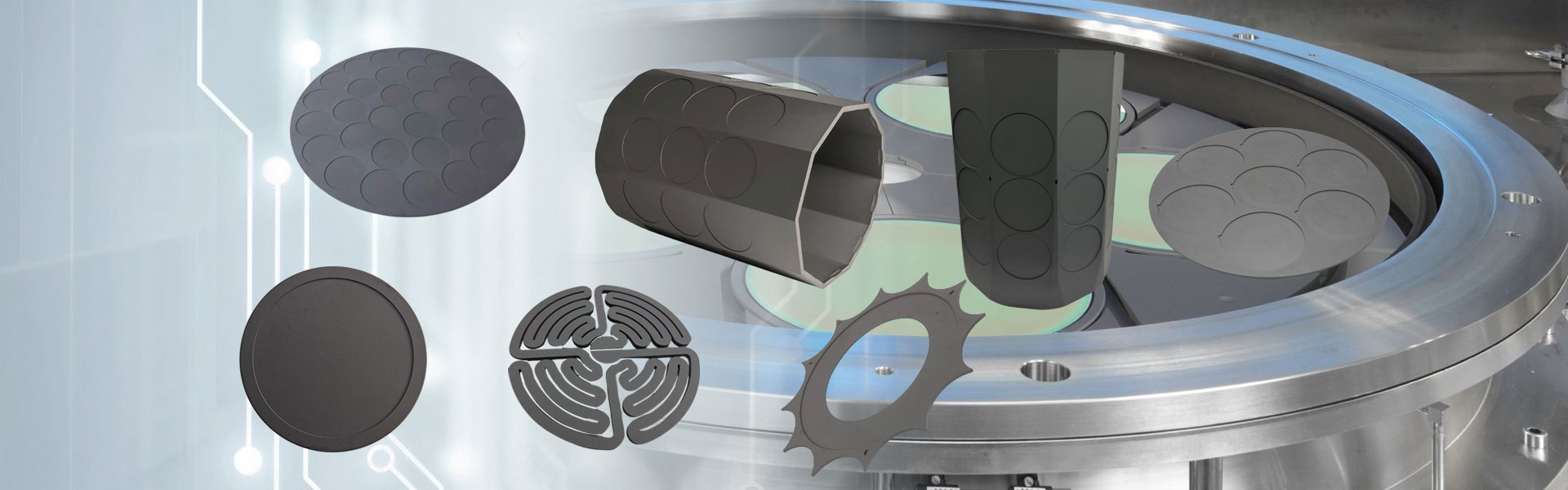
Isostatically pressed graphite is widely used in semiconductor manufacturing processes. It is used in graphite components for the hot zone of single crystal growth furnaces, such as crucibles, heaters, flow guides, and insulation covers; and in graphite components used in epitaxial processes.

- View as
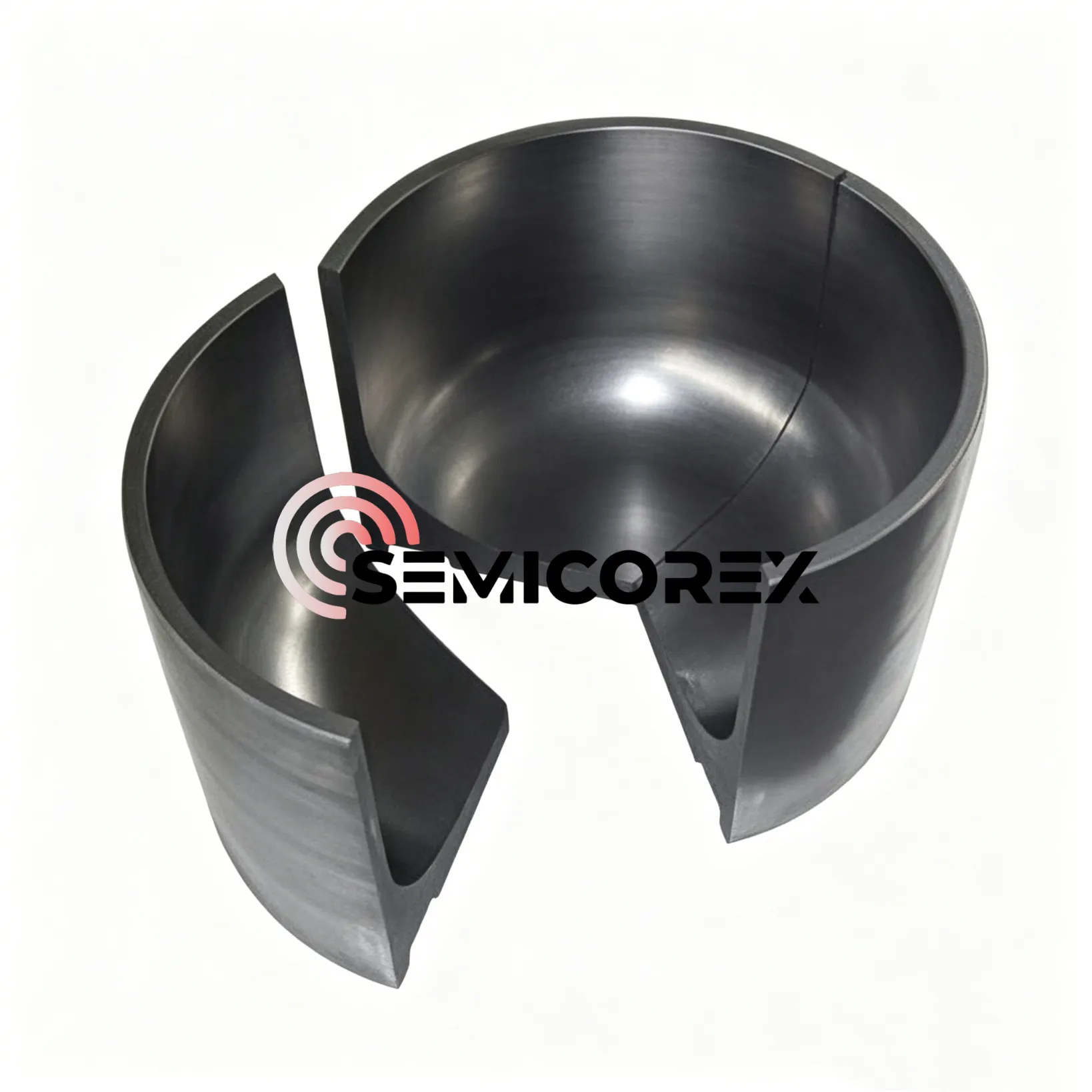
Tredelade grafitdeglar
Semicorex tredelade grafitdeglar är de högpresterande delade grafitbehållarna speciellt framtagna för enkristall-kiseltillväxtprocesser. Idealisk för avancerad termisk halvledarbehandling, Semicorex tredelad grafitdegel kan tillförlitligt stödja kvartsdegeln och dess interna material för att uppnå kontrollerad tillväxt av enkristallstrukturer.
Läs merSkicka förfrågan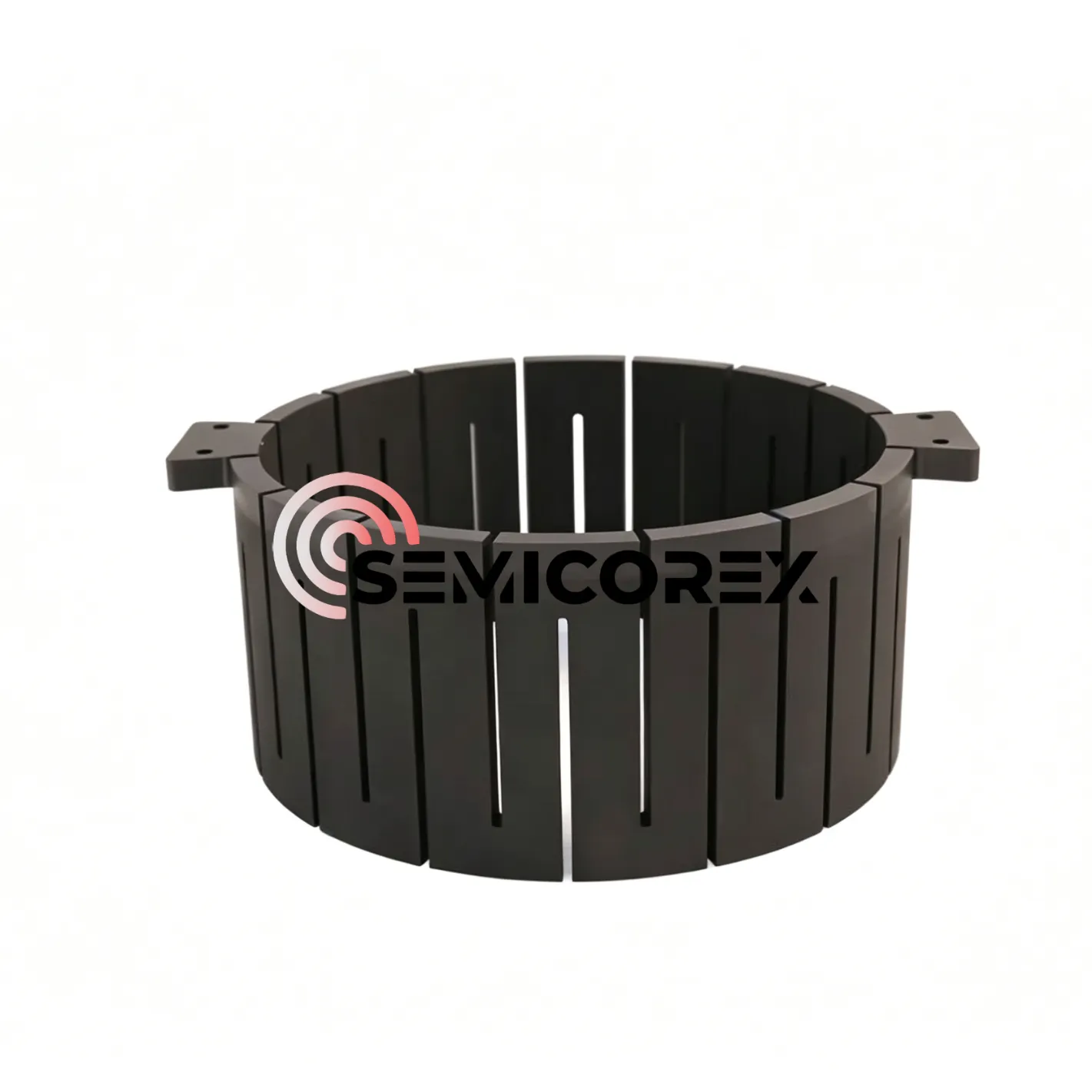
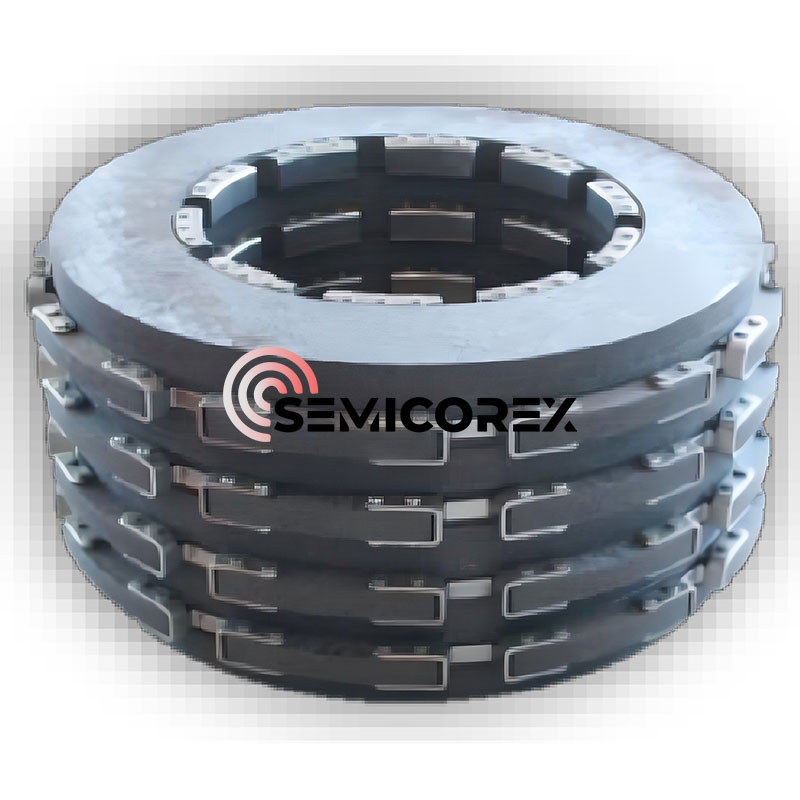
Grafitvärmare av hylstyp
Semicorex sleeve-typ grafitvärmare, de högeffektiva värmeelementen, används ofta i enkristall-tillväxtugnar. Grafitvärmare av Semicorex-hylsa är de avgörande uppvärmningskomponenterna som används i stor utsträckning i enkristallugnarna, konstruerade speciellt för högkvalitativ monokristallin kiseltillväxt. Att välja Semicorex är att välja de idealiska värmebehandlingslösningarna.
Läs merSkicka förfrågan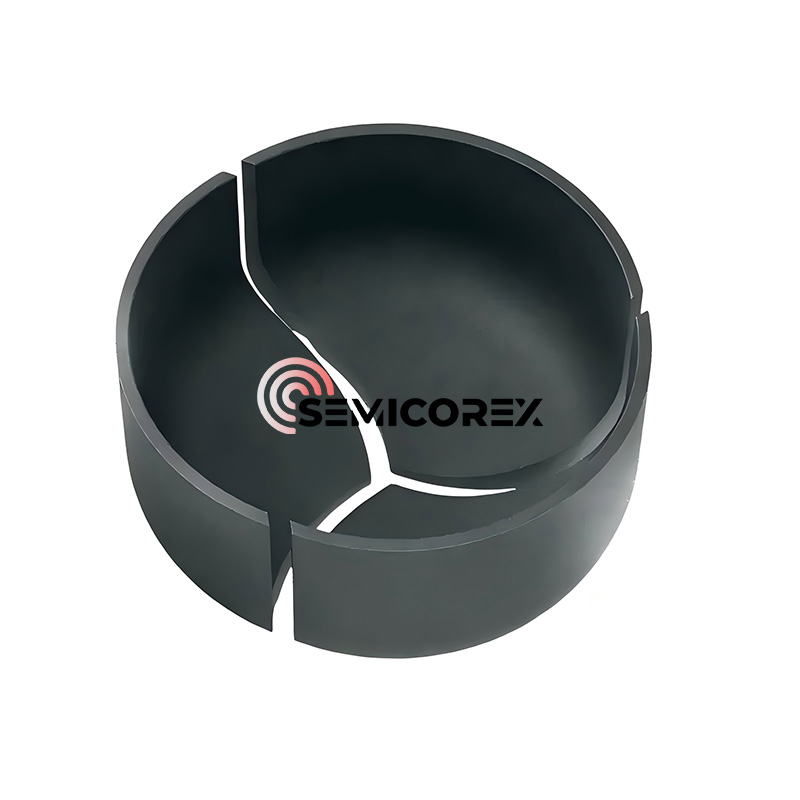
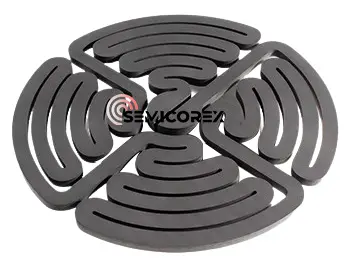
Grafitdegel med tre kronblad
Semicorex-grafitdeglar med hög renhet med tre kronblad har en innovativ avspänningsavlastande arkitektur designad för att maximera utbytet av kristalltillväxt i extrema termiska halvledarmiljöer. Semicorex levererar halvledarmateriallösningar i världsklass över hela världen, vilket ger avancerade industrier kraft med precisionskonstruerade grafit- och keramiska komponenter som backas upp av pålitlig global logistik.*
Läs merSkicka förfrågan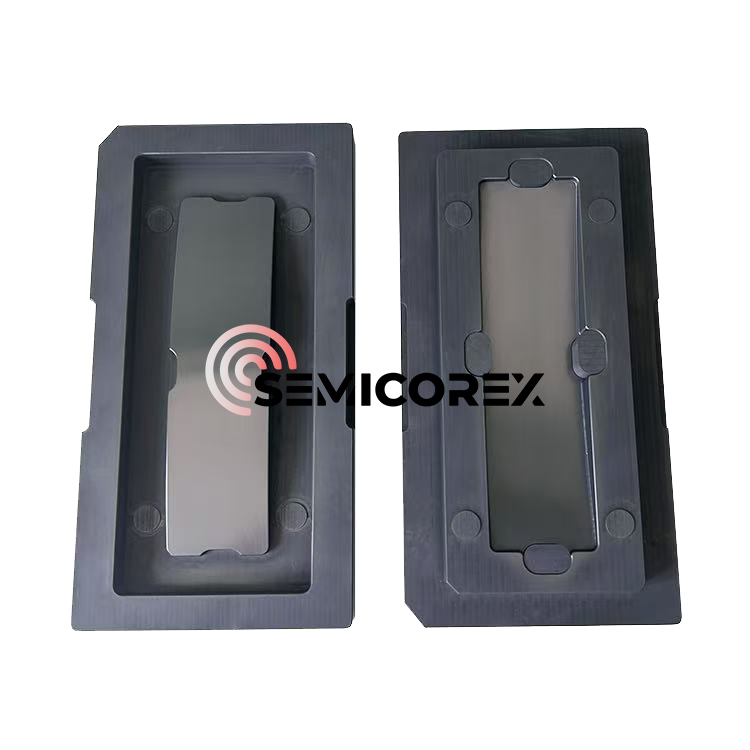
Varmböjd glasgrafitform
Semicorex Hot-bent Glass Graphite Mould är precisionskonstruerad av finkornig grafit med hög renhet för att ge exceptionell högtemperaturbeständighet, termisk chockstabilitet, självsmörjning och kemisk hållbarhet, vilket säkerställer högkvalitativt 3D-böjt glas med minimala defekter. Semicorex är vald för sin djupa expertis, avancerade formdesign och noggranna processkontroll, som effektivt maximerar avkastningen och möter de mest krävande produktionskraven.*
Läs merSkicka förfrågan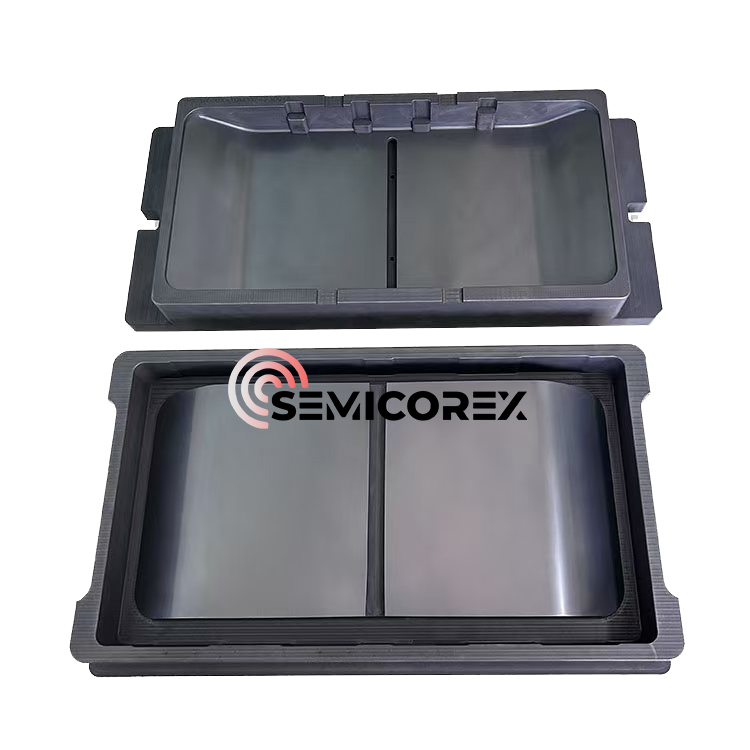
3D varmböjande glasgrafitform
Semicorex 3D Hot Bending Glass Graphite Mould är en avancerad isostatisk grafitform designad för varmböjning av 3D-böjt glas, som erbjuder utmärkt värmestabilitet, värmeledningsförmåga, slitage- och korrosionsbeständighet, förbättrar glasytans kvalitet, förlänger formens livslängd och avsevärt förbättrad produktionseffektivitet och avkastning. Semicorex är utvald för sin pålitliga kvalitet, konsekventa utbud och expertis när det gäller att tillhandahålla avancerade grafitlösningar över hela världen.*
Läs merSkicka förfrågan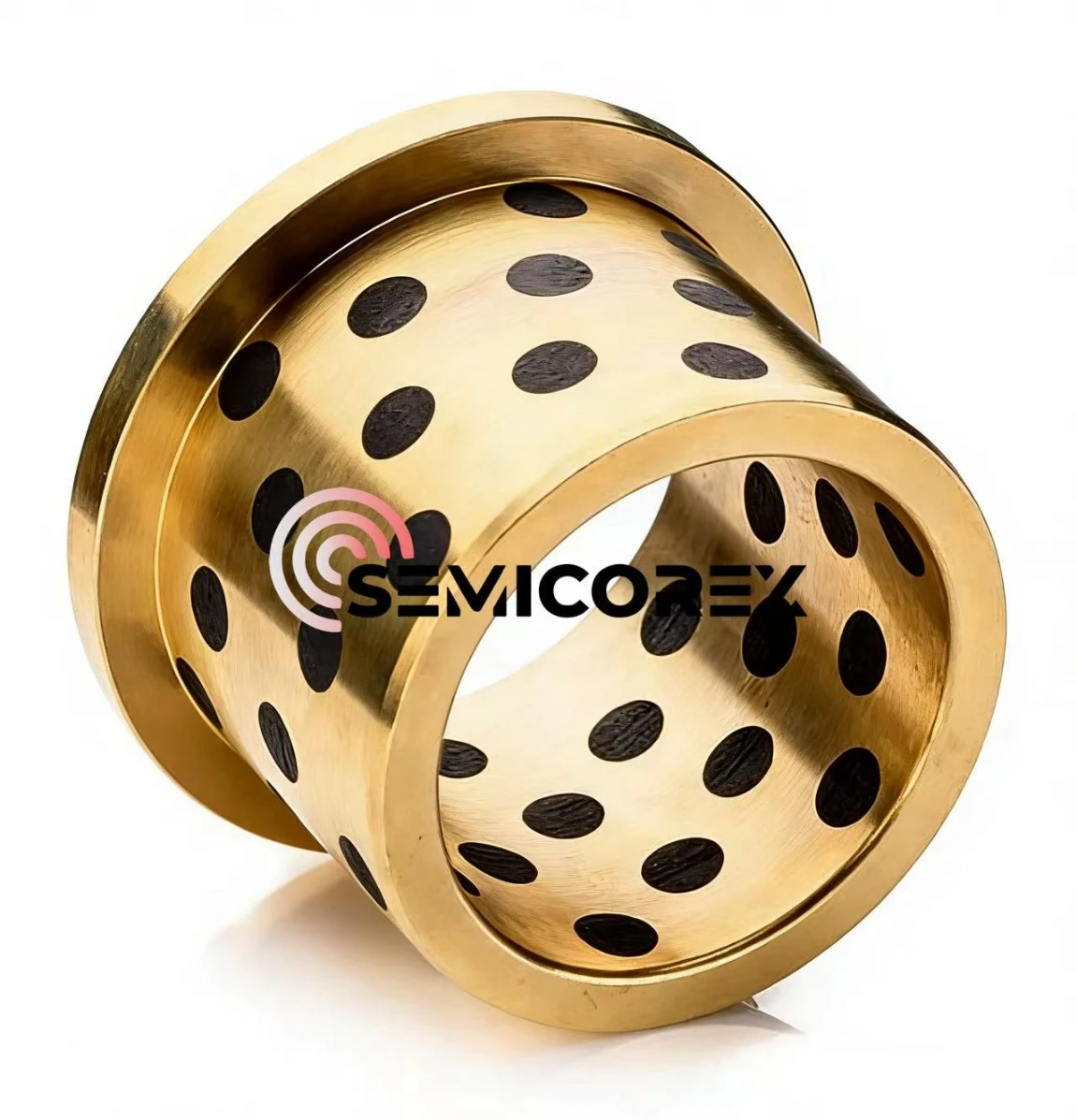
Grafit självsmörjande bussningar
Semicorex grafit självsmörjande bussningar, även kallade oljefria bussningar, är de högpresterande glidlagerkomponenterna designade speciellt för att fungera utan extern smörjning eller oljetillförsel. Med utmärkta prestanda är Semicorex grafit självsmörjande bussningar de idealiska lösningarna för utrustning som arbetar under komplexa miljöer inklusive oljefri drift, höga temperaturer, höga belastningar, låga hastigheter, antifouling, korrosionsbeständighet och strålningsbeständighet.
Läs merSkicka förfrågan
Semicorex har producerat Isostatisk grafit i många år och är en av de professionella Isostatisk grafit tillverkarna och leverantörerna i Kina. När du väl köpt våra avancerade och hållbara produkter som levererar bulkpackning garanterar vi den stora kvantiteten i snabb leverans. Genom åren har vi försett kunderna med kundanpassad service. Kunderna är nöjda med våra produkter och utmärkt service. Vi ser verkligen fram emot att bli din pålitliga långsiktiga affärspartner! Välkommen att köpa produkter från vår fabrik.